Method · Repair & strengthening
We find the cause first, then inject the crack with the resin its moisture calls for — epoxy restores strength in dry or damp cracks; wet cracks are sealed with flexible PU.
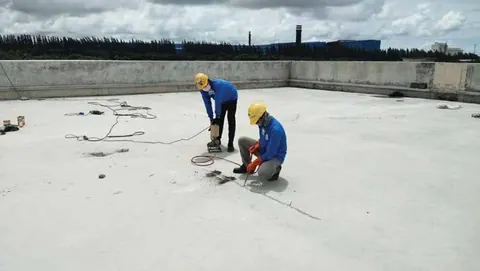
Resin injected into a structural crack to fill it and restore the concrete's strength. Epoxy is used for dry or damp cracks; wet cracks are sealed with flexible PU instead, which does not restore strength.
Structural cracks where strength must be restored.
The crack's moisture decides the resin; each product's data sheet sets the limit. Rigid epoxy in a crack that still moves can crack the concrete beside it. A crack that leaks water takes PU foam or hydrogel instead.
We find the cause — corrosion, movement, leakage or overload — and pick the method for it.
Dry or damp cracks take epoxy resin to restore strength; wet cracks are sealed with flexible PU resin, which does not restore strength; leaks take PU foam or hydrogel.
We find the cause first, then pick the method for it — not just "cover it up".
| Method | What it does | Symptom |
|---|---|---|
| Patching — Surface Repair | Hand-fill chipped/spalled areas. No formwork; about 30–50 mm per layer by product (less overhead). Polymer-modified repair mortar. | Chipped / spalled surface |
| Grouting — Filling Voids | Pour or pump into large voids in columns, beams, machine bases (formwork / pressure). Non-shrink grout (no shrink when cured as directed, tight bond) ・ Epoxy grout (high strength, resists chemicals and vibration). | Large void in a column, beam or machine base |
| Crack Injection — Epoxy or PU resinthis page | Epoxy resin restores strength in dry cracks ・ wetter cracks take flexible PU resin, which seals but does not restore strength. | Structural crack — restore strength |
| Crack Injection — Stop leaks: PU Foam | Foams on contact with water and stops it fast. | Crack that leaks water |
| Crack Injection — Stop leaks: Hydrogel | Swells into a soft, flexible gel — for leaks at joints that move a little. | Leak at a moving joint |
| CFRP Strengthening | Not repair — the goal is to increase the load a structure can carry (e.g. raise a floor's load capacity). 3 forms: Fabric/Wrap ・ Plate/Laminate ・ Rod/Bar. Requires structural-engineer design (ACI 440.2); damaged concrete is repaired first. | Need to carry more load |
Also with this method:Hyundai Motor Company · The Excise Department · Commando Police Housing · Digital Government (DGA) · NAP Hotel · City Tower · Dhurakij Pundit University · Dusit Thani College · Min Buri Wastewater Treatment Plant · PTT Global Chemical · PTT GSP7
The length and width of the cracks, how many there are, access, and whether they are wet or leaking. Send photos of the cracks on LINE.
By the crack's moisture and whether it must carry load: epoxy restores strength in dry or damp cracks (no standing water). Wet cracks are sealed with flexible PU resin, which stops water but does not restore strength. Each product's data sheet sets the moisture limit.
A leaking crack takes PU foam, which foams on contact with water, or hydrogel, which swells into a soft, flexible gel and suits joints that move a little.
Send photos of the crack or damage and where it is. We diagnose the cause and propose the method.
Only want materials? psw-chemical.com ↗TEL +66 2 552 6468 · sales@passawarn.com